
How Deep Is Too Deep? Understanding Different Levels of Car Scratches
A scratch on your car can look harmless at first.
Maybe you brushed against a tree branch. Maybe a shopping cart caught the side of your vehicle. Or maybe you returned to the parking lot and discovered a long mark across the door.
The first question most drivers ask is:
“Can this be polished out, or does it need actual repair?”
The answer depends largely on how deep the scratch goes.
At JJ Autobody Inc., we know that not every scratch requires the same solution. Some marks affect only the surface, while others cut through multiple layers of your vehicle’s finish and expose the material underneath.
Understanding the difference can help you know when a scratch is cosmetic and when it deserves professional attention.
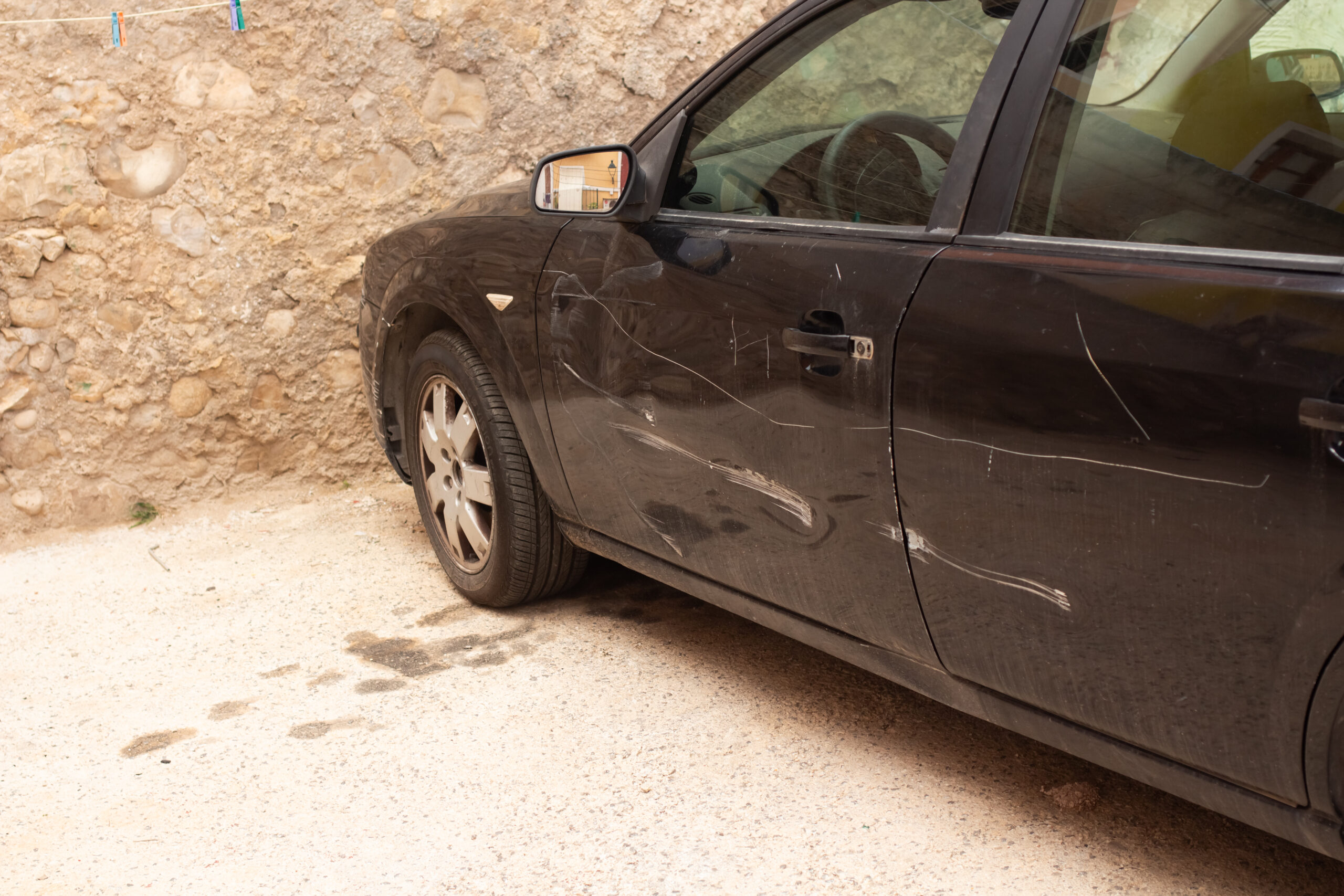
Your Car’s Paint Has More Than One Layer
Before comparing scratches, it helps to understand what they are cutting through.
A typical automotive finish includes several layers:
Clear coat – The transparent outer layer that helps protect the color underneath and creates gloss.
Base coat – The layer responsible for your vehicle’s actual color.
Primer – A protective layer between the paint and the vehicle’s body panel.
Bare panel – The metal or other body material underneath the paint system.
The deeper a scratch travels through these layers, the more involved the repair can become.
So let’s look at scratches from the outside in.
Level 1: The Scratch You Can Barely Feel
You notice a faint line under bright sunlight, but when you run your finger across it, the surface still feels relatively smooth.
This may be a clear-coat scratch.
These scratches can come from everyday situations such as:
- Automatic car washes
- Dirty towels
- Light contact with bushes
- Improper washing techniques
- Dust being rubbed across the paint
Because the damage may only affect the upper clear coat, professional polishing or paint correction may be enough in some cases.
A quick clue:
If the scratch becomes much harder to see when the surface is wet, there is a chance the damage is concentrated in the clear coat.
However, appearance alone should not be used to determine the correct repair.
Level 2: Your Fingernail Catches the Scratch
Now the damage is getting deeper.
If you lightly move your fingernail across the surface and it catches noticeably in the scratch, the damage may extend deeper into the clear coat or even reach the colored paint layer.
These scratches often look more defined than light surface marks.
They may result from:
- Keys or sharp objects
- Shopping carts
- Another vehicle’s door
- Objects dragged against the car
- Minor parking incidents
At this level, polishing alone may not completely remove the scratch.
Trying to aggressively buff the area can actually remove too much clear coat without fixing the deeper damage.
A professional evaluation can determine whether the area needs correction, touch-up work, or more complete refinishing.
Level 3: You Can See a Different Color Underneath
This is where the scratch becomes harder to ignore.
If the mark appears white, gray, or another color that does not match your vehicle’s paint, the scratch may have passed through the base coat and reached the primer.
At this point, the original color layer has been damaged.
For example, imagine a black vehicle with a scratch showing a light gray line underneath.
That line is not simply dirt sitting on the paint.
It may be the primer becoming visible.
Why this matters
Once the base coat has been penetrated, polishing cannot replace missing paint.
The damaged area may need to be properly refinished to restore the appearance of the panel.
Level 4: Bare Metal Is Visible
This is one of the more serious types of paint damage.
A deep scratch can cut through the:
Clear coat → Color coat → Primer → Metal underneath
You may see a silver or metallic line inside the scratch.
This can happen after stronger contact with objects such as:
- Concrete walls
- Metal poles
- Another vehicle
- Road debris
- Sharp objects
At this stage, the concern is no longer just appearance.
The paint system helps separate the metal panel from moisture and environmental exposure. When bare metal is left exposed, corrosion can become a concern over time.
A small scratch today can become a much more noticeable damaged area later if it is ignored.
The “Small Scratch” That Isn’t Really Small
Length does not always tell you how serious a scratch is.
Consider these two situations:
Scratch A: A 10-inch mark that barely touches the clear coat.
Scratch B: A 1-inch gouge that reaches bare metal.
Scratch A may look much more dramatic simply because it is longer.
But Scratch B may require more extensive repair because it penetrated deeper into the paint system.
This is why professional scratch repair is based on the depth, location, surrounding damage, and condition of the paint, not simply the length of the mark.
Where the Scratch Happens Also Matters
A scratch in the center of a relatively flat door panel may present a different repair situation than damage located along:
- A body line
- Panel edge
- Fender curve
- Bumper corner
- Door edge
- Wheel arch
Modern vehicles have complex shapes, contours, and finishes.
Restoring the damaged section means more than filling the scratch. The repaired area should blend properly with the surrounding surface so the finish looks consistent.
What About Touch-Up Paint?
Touch-up paint can sometimes make very small chips or scratches less noticeable, but it does not automatically make every scratch disappear.
Deep or extensive scratches may require additional preparation and refinishing.
Using the wrong color, applying too much paint, or attempting to cover significant damage without preparing the surface can leave the repair more noticeable.
If appearance matters to you, especially on a highly visible panel, having the damage evaluated first can save you from creating another problem that needs to be corrected later.
Don’t Assume Every Scratch Will Buff Out
This is one of the most common misunderstandings about automotive scratches.
Buffing works by correcting imperfections within the upper portion of the finish.
It cannot simply “erase” paint that is already missing.
If the scratch has reached the base coat, primer, or bare panel, the solution may involve more than polishing.
Knowing the depth of the damage is the important first step.
Scratch Repair at JJ Autobody Inc.
At JJ Autobody Inc., we look beyond the visible line on your vehicle.
We evaluate how deeply the scratch penetrated, whether the surrounding paint has been damaged, and what type of repair can help restore the affected area properly.
Whether you are dealing with a light surface mark, parking-lot scratch, deep gouge, or collision-related paint damage, our team can help determine the appropriate repair approach.
Not sure how deep your car’s scratch really is? Bring it to JJ Autobody Inc. and let us determine whether it needs a simple correction or more complete scratch repair.